
You Can't Wake Someone Up
The hard truth about transformation — in life, in brands, and in yourself.

The Moment After the Revelation
There’s a moment I’ve lived more than once. Across a table, or a board deck, or a long walk with someone I care about. I have articulate a true thing going on with them — named what’s actually happening — and watched them receive it.
They nod. Sometimes they tear. They say “you’re 100% right.”
And then, months later, they’re back in the old thing. Not because I named it wrong. Because naming is not waking.
You cannot wake someone up. That’s the hard thing. You can hand them revelation. But you cannot make them reconcile it with what they are still attached to.

I’ve Been the One Who Went Back
I’ve been on both sides of this.
There have been seasons of my life when someone I trusted — someone who loved me enough to say the true thing — pointed clearly at a pattern I was living inside. I heard them. I agreed. I said “you’re 100% right.” I felt the relief of being seen - and seeing it.
And then, slowly, I returned to it. Not in defiance. Not really even in awareness. I just found myself drifting back into the familiar terrain that had never really lost its hold on me.
This isn’t necessarily weakness. This is the nature of how change doesn’t happen.
We believe that if someone can name what’s wrong, the naming will produce the leaving. It doesn’t. Not reliably. Not without something else.
The Professional Version of the Same Mistake
I’ve made this mistake professionally, too.
I’m good at reading organizational DNA. At entering the slow, compounding deviation that happens when a company has detached from its footing. Naming the position that should be governing, but isn’t anymore. Often times, they’re unaware of the drift, too.
I’ve walked executive teams through that diagnosis and watched them light up at the clarity of it. Even to the point of tears. Yes, real tears.
And then watched them abandon it. Go back to what we all agreed months before was actually lifeless.
Not because the work was wrong. Because I made a version of the same mistake I made in my own life: I named what was possible without cleanly naming what was governing things now, what had been lost because of it, and what would continue to be lost if nothing changed.
I handed them the destination without giving them reason enough to leave where they were. I attracted them to their future without giving them a chance to sit in the cost of their present.
Vessels, Discord, and the Squander of Unlived Potential
People and companies are both vessels. Built to carry and further truth. Built to do work that’s good.
When there’s discord between what is and what could be — when the cost of that gap is left unnamed, unfelt, even ungrieved — the vessel doesn’t necessarily break. It dims, slowly, more and more over time, like the fading headlights of a car whose battery is leaking juice.
That is the squander. Not collapse, but diminishment.
Purpose, potential, and opportunity lost must be grieved. Not analyzed. Not reframed. Grieved.
Grief is the only thing that makes the gap feel real enough to do something different.
Without it, where you’re stuck doesn’t feel like less. And if it doesn’t feel like less — if the cost of sleep is never felt in the body, not just conceptualized in the mind — why would you leave? Why would you take change seriously?
You wouldn’t. You’d stay. Remain. Comfortable in motion. Mistaking activity for advancing. Calling drift momentum.
This is true of a person in a season they’ve outgrown. It’s equally true of a brand that has stopped being what it started out to be. The signs are the same - and so is the process for reconciliation.

Transformation has three movements.
The first is naming the limiting belief — the thing that’s actually governing behavior, regardless of what the stated values say. Not the “strategy” problem. The belief underneath that animates everything.
The second is feeling its effect. Not understanding it. Feeling it. The cost of it. The grief of what has been compromised or lost in service of it. This is the movement most people — most advisors, most leaders, most of us in the mirror — want to skip. It’s uncomfortable. It looks like pain and ownership, and we are trained to move around pain - and away from accountability.
Grief is not an obstacle to transformation. It is the substance of it.
The third is naming the freeing conviction — the true thing that holds when the limiting belief is released. Not a replacement strategy. A new place to move from. A fresh position; something pivotal from which to govern anew.
Without all three, you run the risk of sending someone - or something - with dimming headlights down a road that has ditches on both sides.
People and brands don’t awaken until the cost of sleep’s been felt.
This is the line I’ve learned to say. And to mean.
Not: here’s what you could become. That is seduction. Yes it sells ideas and stirs emotions; but it tends to produce motion without mooring.
But: here’s what’s costing you to stay here. Here’s what’s already been lost. Here’s the grief underneath the activity. And only then: here’s what becomes possible when you stop avoiding the thing that’s limiting you.
The presence of grief isn’t a failure of strategy. It’s evidence that something sacred was at stake. That real things were lost. And it’s the ground from which a conviction can take root that says “never again.”
The most honest work I do now isn’t just naming what could be. It’s also naming what is — fully — and trusting that the person across the table, or in the mirror, is capable of staying with it long enough for something to shift.
The Inheritance
My ancestor Pioneer George Hobler went to Australia in 1826 and kept a detailed journal. Not for himself. For those who would come after — so they could understand the terrain he had walked through, to use the keys he earned to better their lives.
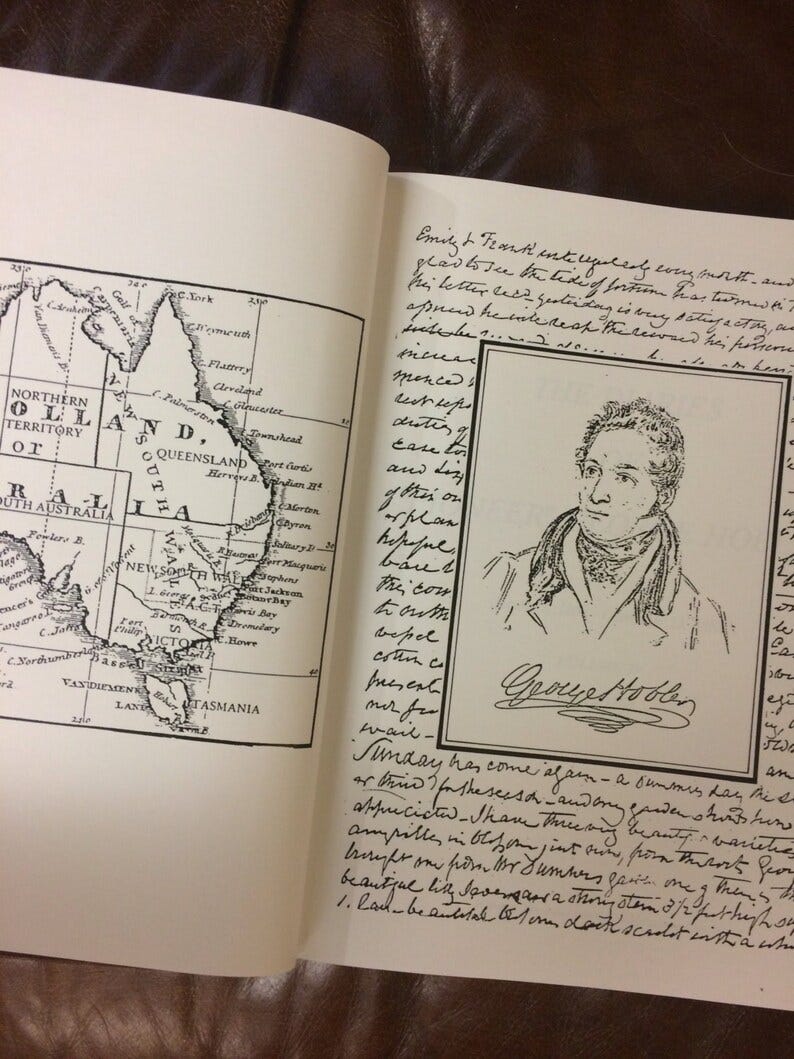
He didn’t soften what was hard. He wrote what was true.
That’s the inheritance I aspire to honor. To go into the wilderness. Find the footing. Name what’s actually there — not what would be more comfortable to report. Then help people see the beauty of what could be built.
That’s the work. From the living room to the boardroom.
I just launched Fireside Sessions: confidential cohorts of 3 leaders per group to help one another get to the bottom of your toughest questions. Applications now open: https://bit.ly/gofireside